Showing posts with label Safety. Show all posts

Advanced Brake Warning Systems Explained

Modern vehicles are evolving faster than ever, and safety innovation sits at the heart of that transformation. Among the most significant breakthroughs is Advanced Brake Warning (ABW) — a system designed to detect potential collisions, warn drivers, and in many cases, automatically apply the brakes before impact. This technology, once confined to luxury models, is now spreading rapidly across mainstream brands, reshaping how we drive and how accidents are prevented.


What Is Advanced Brake Warning?

Advanced Brake Warning refers to systems that sense when a vehicle is about to brake suddenly — or when a collision appears imminent — and either alert the driver or automatically slow the car down. Unlike traditional brake lights, which activate only when a driver presses the pedal, ABW systems anticipate braking events and can trigger earlier visual or audible alerts.

The earliest version appeared in Israel in 1989, when engineers developed a mechanism that illuminated brake lights the instant a driver released the accelerator abruptly, warning trailing motorists of an impending stop. That simple concept became the foundation for today’s complex radar-, lidar-, and camera-based safety suites that continuously analyze traffic, speed, and obstacles.


How Advanced Brake Warning Works

Advanced Brake Warning systems blend sensors, software, and predictive modeling to detect danger faster than a human could. Here’s how a modern setup functions:

  1. Environmental Sensing
    Radar, lidar, or cameras monitor the space ahead, measuring the distance and relative speed between vehicles.

  2. Driver-Input Monitoring
    Software watches how the driver releases the accelerator, steers, or presses the brake pedal. A quick lift-off or delayed braking can indicate panic or distraction.

  3. Warning Stage
    When a risk is detected, the system issues visual, audible, or haptic cues — flashing dashboard icons, alarms, or seat vibrations — urging immediate action.

  4. Brake Pre-Charging
    Some systems pre-pressurize the braking circuit so that the slightest pedal touch produces full braking force.

  5. Automatic Intervention
    If the driver fails to react, the car applies the brakes automatically through Automatic Emergency Braking (AEB).

  6. Post-Impact Support
    After a collision, certain models apply the brakes again to prevent secondary impacts or keep the vehicle stable.

Together, these layers can shave critical fractions of a second off reaction time — often the difference between a near miss and a crash.


Why It Matters

The benefits of Advanced Brake Warning and AEB are clear:

  • Fewer Rear-End Crashes: Bosch research shows up to 34 percent of rear-end collisions could be avoided if all vehicles used AEB.

  • Shorter Stopping Distances: Pre-charging brakes can reduce stopping distance by several feet.

  • Pedestrian Protection: Systems detect walkers or cyclists crossing in front of the car, particularly valuable in urban settings.

  • Fleet Savings: Fewer accidents mean reduced insurance claims and downtime for delivery and logistics operators.

  • Regulatory Momentum: The U.S. NHTSA has mandated that all new passenger vehicles include AEB with pedestrian detection by 2029.


Limits and Challenges

Despite their promise, these systems have constraints:

  • False Triggers in dense traffic can annoy drivers.

  • Sensor Blind Spots in fog, rain, or snow reduce accuracy.

  • Driver Over-Reliance can cause complacency.

  • Cost Barriers still limit adoption in entry-level trims.

  • Standardization Issues slow global rollout as governments debate visual-signal regulations.

The bottom line: ABW is a tool, not a substitute for attentive driving.


Cars That Feature Advanced Brake Warning or AEB (2025 Models)

Toyota — Safety Sense 3.0

Models such as the Camry Hybrid, Corolla, RAV4, and Highlander include Toyota’s Pre-Collision System, combining radar and cameras with pedestrian and cyclist detection.

Subaru — EyeSight Driver Assist

Every Outback, Forester, and Crosstrek uses twin stereo cameras to monitor traffic and apply full braking automatically when needed.

Hyundai — SmartSense

The Elantra, Tucson, and Santa Fe Hybrid come standard with Forward Collision-Avoidance Assist, detecting vehicles, pedestrians, and cyclists.

Nissan — Safety Shield 360

The Sentra, Altima, and Rogue provide front and rear automatic braking plus cross-traffic alerts.

Mazda — i-Activsense

Models like the CX-5, CX-90, and Mazda3 feature full-speed AEB, including night-time pedestrian detection.

Audi — Pre Sense Front

Vehicles such as the A6, A7, and Q8 e-tron use radar-camera fusion to deliver precise automatic braking up to highway speeds.

GMC — Pro Safety Package

The Terrain, Acadia, and Sierra 1500 now include Forward Collision Alert and AEB as standard across most trims.


Tesla’s Vision-Based Approach

1. Tesla Vision

Tesla eliminated radar and ultrasonic sensors between 2021 and 2023, creating a camera-only, AI-driven perception system. Known as Tesla Vision, it interprets surroundings using neural networks that mimic human sight, allowing the vehicle to identify obstacles, lane markings, and movement patterns purely through cameras.

2. Forward Collision Warning

Tesla’s Forward Collision Warning (FCW) alerts the driver with beeps and vivid red visual cues on the dashboard whenever a potential frontal impact is detected.

3. Automatic Emergency Braking

If the driver fails to respond, Tesla’s AEB automatically slows or stops the vehicle. The system works from 5 to 90 mph and recognizes vehicles, pedestrians, and cyclists.

4. Obstacle-Aware Acceleration

This unique safeguard reduces throttle power if an obstacle is detected ahead, preventing sudden acceleration into stationary objects — particularly useful in parking situations.

5. Continuous Improvement Through Software

Every Tesla receives over-the-air (OTA) updates that refine braking algorithms, improve recognition accuracy, and add features without requiring a service visit. This means a 2021 Model 3 can benefit from the same braking intelligence as a 2025 Model Y.

6. Vision Limitations

Because Tesla relies solely on visual input, performance can degrade in heavy fog, blinding sunlight, or snow-covered conditions that obscure cameras. The company counters this with deep-learning prediction models that infer object motion even when visibility drops.


How Tesla Compares to Other Automakers

Sensor Philosophy: Vision vs Radar

Most automakers — Toyota, Subaru, Hyundai, Audi — employ radar and cameras in tandem for redundancy. Radar measures distance and speed reliably in any weather; cameras add object recognition.
Tesla, by contrast, uses vision-only AI, betting that advanced neural networks can achieve the same precision without radar. This simplifies hardware but demands exceptional software training and clear visibility.

Update Advantage

Tesla’s biggest edge is continuous software evolution. Traditional automakers ship updates with each new model year, whereas Tesla pushes improvements directly to existing owners. Braking behavior, warning sensitivity, and object-detection accuracy can all improve overnight through OTA updates. Toyota and Subaru systems remain hardware-bound; Audi offers updates but primarily through dealership service.

Performance in Real-World Tests

Independent evaluations by the Insurance Institute for Highway Safety (IIHS) show Tesla’s pedestrian AEB performs strongly in daylight and moderate conditions. Radar-based systems like Subaru’s EyeSight still lead in fog, snow, and night-time detection. Tesla’s system shines on clear highways but relies on perfect camera calibration to maintain reliability.

System Integration

Tesla integrates braking, steering, and navigation through a single neural-network architecture that underpins Autopilot and Full Self-Driving (FSD). This holistic design allows the car not just to react to danger but to predict driver intent, merging acceleration and braking data with route planning.
Other brands use modular systems: AEB and adaptive cruise share limited data, functioning independently. Tesla’s unified approach means each braking event helps train the system fleet-wide.

Bottom Line

Tesla’s method emphasizes software agility and fleet learning, while traditional automakers prioritize sensor redundancy and weather resilience. Radar-fusion systems deliver steady, all-condition reliability; Tesla’s pure-vision model evolves faster through AI and updates. Both philosophies are steering the industry toward the same goal — zero collisions.


The Road Ahead

  1. Vehicle-to-Everything (V2X) Communication
    Next-generation braking systems will exchange data with surrounding vehicles and infrastructure, allowing chain-reaction warnings before a human senses danger.

  2. Smart Tires and Road Condition Data
    Companies such as Goodyear are developing sensors that detect wet or icy pavement and feed friction data into braking logic.

  3. AI Prediction and Contextual Awareness
    Machine-learning models now forecast not just collisions but driver intent, predicting lane changes or hesitation.

  4. Regulatory Deadlines
    By 2029, all U.S. light vehicles under 10,000 lbs must include AEB with pedestrian detection. Low-volume manufacturers have until 2030.

  5. Retrofit Possibilities
    As hardware costs drop, after-market kits could soon add advanced braking and warning systems to older vehicles.


Tips for Drivers

  • Stay Engaged: Never depend solely on automation; remain alert.

  • Maintain Sensors: Clean camera lenses and radar panels regularly.

  • Know Your Alerts: Learn what each tone or icon means in your vehicle.

  • Install Updates: Apply software patches promptly, especially for OTA-capable cars like Tesla.

  • Check Recalls: Manufacturers occasionally recalibrate AEB for sensitivity or range issues.


Conclusion

Advanced Brake Warning and Automatic Emergency Braking represent a revolution in vehicle safety — technologies that think faster than humans and act when milliseconds matter.

Tesla leads with a vision-only, software-driven model that constantly improves, proving that artificial intelligence can enhance physical safety systems. Toyota, Subaru, and Audi, meanwhile, continue to refine radar-camera fusion for unmatched consistency in any weather. Together, these strategies are converging on the same outcome: safer roads, fewer collisions, and the steady march toward autonomous mobility.

In the near future, every new vehicle — from family sedans to electric SUVs — will come equipped with advanced braking intelligence. What began as a simple warning light in 1989 has evolved into one of the most effective life-saving technologies ever placed in a car.

Effectiveness & Safety Benefits of Speed Cameras

Speed cameras, also known as automated speed enforcement systems, have been deployed across the world as a strategy to reduce speeding and improve road safety. These devices capture images or video of vehicles traveling above the posted speed limit and issue citations to violators. Over the years, their effectiveness and safety benefits have been studied extensively, with findings highlighting reduced traffic incidents, fewer fatalities, and enhanced compliance with traffic laws. Still, their impact can vary depending on how they are implemented, monitored, and integrated into broader traffic safety initiatives.

Global Evidence and the Cochrane Review

Why Drivers Run Red Lights: Top 10 Reasons & Risks

running red light 

Red light running is one of the most common and dangerous traffic violations worldwide. At nearly every busy intersection, you’ve probably witnessed a driver pushing through just as the light turns red—or worse, long after. This behavior is not only illegal but also a major contributor to car crashes, pedestrian accidents, and traffic fatalities. According to transportation safety studies, thousands of collisions each year are directly linked to red light violations.

Understanding why drivers run red lights is critical for prevention, awareness, and safer driving habits. Below, we’ll break down the ten most common reasons behind this risky behavior, followed by the consequences and strategies to reduce red light running.

1. Impatience and Being in a Hurry

One of the leading causes of red light running is simple impatience. Drivers running late for work, appointments, or flights often decide that saving 30 seconds at an intersection is worth the risk. In congested urban areas, these hurried decisions are especially common. Unfortunately, what feels like a “time saver” can quickly turn into a life-altering collision. The reality is that the few seconds gained by running a red light are negligible compared to the potential consequences of a crash, injury, or death.

2. Distracted Driving

In today’s smartphone-obsessed world, distracted driving has become a crisis on its own. Texting, scrolling social media, eating, adjusting navigation apps, or even talking with passengers can divert attention long enough to miss a signal change. A distracted driver might not notice a light turning red until it’s too late, leading them to inadvertently enter the intersection against traffic. Because distraction slows reaction time, even a small lapse in focus can be deadly at intersections where pedestrians and cross-traffic have the right of way.

3. Intoxication and Impaired Judgment

Alcohol and drugs significantly impair judgment, reaction times, and coordination. An intoxicated driver may misjudge the timing of a yellow light, or fail to even register a red signal altogether. Studies consistently show that impaired drivers are overrepresented in red light running crashes. This is one reason DUI laws are strictly enforced, as impaired decision-making combined with intersection traffic is a recipe for disaster.

4. Reckless Driving

Reckless drivers—those who speed excessively, weave through lanes, or treat road rules as optional—are naturally more prone to running red lights. For these individuals, the violation may not be an accident but rather an intentional act of defiance. Their behavior endangers not only themselves but everyone else sharing the road. Intersections become particularly hazardous when reckless drivers assume they can “beat the light” at high speeds.

5. Inexperience Behind the Wheel

New drivers often lack the experience and situational awareness to anticipate light changes or judge stopping distances. They may also underestimate the importance of complete compliance with traffic signals. Inexperience can lead to hesitation or confusion at intersections, sometimes resulting in accidental red light running. Driver education programs stress the importance of defensive driving, but without practice, young drivers may still make critical errors.

6. Emergency Situations

Not every red light violation stems from negligence. Sometimes drivers run red lights to respond to emergencies—whether rushing someone to the hospital, trying to escape a dangerous situation, or avoiding a collision. While most jurisdictions allow emergency vehicles like ambulances, police cars, and fire trucks to lawfully pass red lights with sirens on, private drivers are still required to stop. Even in emergencies, running a light carries high risks that could make the situation worse.

7. Aggressive Driving

Aggressive drivers share similarities with reckless ones, but their actions are often fueled by road rage or frustration. Tailgating, cutting off other vehicles, and accelerating through yellow lights are all forms of aggressive driving that frequently result in red light running. These drivers may feel entitled to maintain their pace regardless of signals, prioritizing their own convenience over safety.

8. Confusion at Intersections

Not all red light running is intentional. In complicated intersections with multiple signals, turn arrows, or poor signage, drivers may genuinely become confused. For example, a motorist might mistake a green arrow for a green light in their lane, or misinterpret flashing signals. Confusion is especially common for visitors unfamiliar with local traffic laws, such as right-on-red rules or flashing red/yellow patterns. Poor visibility and faded markings can make matters worse.

9. Mechanical Issues

Though rare, mechanical failures like brake malfunctions or stuck accelerators can force a driver through an intersection against their will. Regular vehicle maintenance is crucial to minimize this risk, as even well-intentioned drivers are helpless if their car won’t stop. When investigating collisions, authorities sometimes discover faulty equipment played a role in a red light violation.

10. Weather and Road Conditions

Weather is a powerful factor in traffic safety. Wet or icy roads increase stopping distances, and drivers traveling too fast for conditions may be unable to stop when the light turns red. Fog can also reduce visibility so severely that drivers don’t notice the signal until it’s too late. Defensive driving—slowing down, leaving extra space, and anticipating slick conditions—is the best protection against weather-related violations.

The Consequences of Running Red Lights

Running a red light is never a minor infraction. The consequences ripple far beyond the driver:

Collisions and Crashes

Intersections are some of the most dangerous areas on the road. Red light running often leads to T-bone collisions, side-impact crashes, and accidents involving pedestrians and cyclists. These types of crashes are among the deadliest because the sides of vehicles offer less protection than the front or rear.

Injuries and Fatalities

Victims of red light crashes may suffer broken bones, traumatic brain injuries, spinal cord damage, or worse. According to traffic safety reports, hundreds of fatalities annually are attributed to red light violations in the United States alone.

Legal and Financial Penalties

A single violation can carry steep fines, points on your license, and possible suspension for repeat offenders. Some states even use red light cameras to automatically ticket violators. Beyond legal trouble, insurance companies often raise rates significantly after a red light ticket or crash.

Increased Traffic Congestion

When collisions occur at intersections, traffic flow is disrupted. Emergency response, investigations, and blocked lanes can create backups that ripple through city streets for hours.

How to Prevent Red Light Running

The good news is that red light running is entirely preventable. Here are key strategies for drivers:

  • Slow down before intersections rather than speeding up to beat the light.

  • Stay alert by putting away your phone and reducing in-car distractions.

  • Plan ahead so you don’t feel pressured to rush through lights.

  • Respect yellow lights as a signal to prepare to stop, not an excuse to accelerate.

  • Maintain your vehicle to ensure brakes and tires are in top condition.

  • Adjust for weather by leaving more stopping distance and driving cautiously.

  • Stay calm even when frustrated, remembering that safety is worth more than a few seconds saved.

Conclusion: Safety Over Speed

Running a red light might seem like a small risk when you’re late or distracted, but it’s one of the most dangerous choices a driver can make. Whether caused by impatience, intoxication, weather, or confusion, every red light violation puts lives at stake. By staying attentive, patient, and prepared, drivers can help make intersections safer for everyone.

Next time you approach a yellow light, ask yourself: Is saving a few seconds really worth risking someone’s life?

Can You Tell When an Intersection Is Unsafe?

Intersections are where the flow of traffic, pedestrians, and cyclists meet—and often where the highest number of crashes occur. In nearly every city, there are intersections that locals know to avoid or approach with extra caution. But the question remains: are most people aware of dangerous intersections when they see them?

This article explores how drivers perceive intersection risks, the factors that make some crossroads more dangerous than others, and what can be done to increase awareness and safety.

Why Intersections Are Inherently Risky

Unlike straight stretches of road, intersections force drivers to make multiple simultaneous decisions—when to stop, when to yield, whether to accelerate, and how to avoid oncoming traffic. Add pedestrians, cyclists, and traffic signals to the mix, and the margin for error narrows.

According to the Federal Highway Administration, over 50% of serious accidents happen at or near intersections. This makes them one of the most dangerous points in the transportation network.

What Makes an Intersection Dangerous?

Not all intersections are created equal. Some seem perfectly safe at first glance but conceal hidden hazards. Others are visibly chaotic, making drivers tense as soon as they approach.

Key factors that contribute to dangerous intersections include:

Some intersections combine several of these elements, making crashes almost inevitable unless countermeasures are introduced.

Do Drivers Recognize Dangerous Intersections?

Locals vs. Visitors

Local residents often know which intersections in their city are risky. They may instinctively slow down, avoid certain turns, or even reroute to stay safe. Visitors, on the other hand, lack that insider knowledge. This gap in awareness is why many accidents involve out-of-town drivers unfamiliar with the area.

The Role of Experience

Experienced drivers may notice red flags—like poor sightlines or heavy cross-traffic—before entering an intersection. New drivers, however, may only learn through trial and error. Unfortunately, that learning curve sometimes comes with collisions or near-misses.

Perception vs. Reality

Interestingly, research shows that drivers often overestimate their awareness of risk. They may assume they can spot a dangerous intersection on sight, but many hazards are invisible until too late. For example, a seemingly quiet suburban intersection could hide a history of rear-end crashes due to short yellow light times.

Why People Miss the Warning Signs

Even at obviously risky intersections, not everyone recognizes the danger. Here’s why:

  1. Distraction – Smartphones, navigation systems, or in-car entertainment pull attention away.

  2. Overconfidence – Experienced drivers may believe they can handle any situation.

  3. Unfamiliarity – Out-of-town drivers are focused on directions, not subtle traffic cues.

  4. Lack of data – Drivers don’t have access to historical crash statistics while on the road.

The reality is that danger isn’t always intuitive. An intersection’s risk may come from design flaws invisible to the naked eye.

The Psychology of Risk Awareness

Humans are wired to notice obvious threats—like another car running a red light—but not gradual or systemic risks. This is why many people fail to identify dangerous intersections until after they’ve experienced or witnessed a crash.

Studies in traffic psychology show that familiarity reduces perceived danger. If a driver passes through a hazardous intersection daily without incident, they may stop seeing it as risky, even if crash data says otherwise.

Technology and Data: Making Hidden Dangers Visible

Thanks to advances in mapping, analytics, and crowdsourcing, drivers no longer have to rely solely on personal experience to recognize danger. Tools like dangerous intersection maps, crash heat maps, and navigation apps with safety alerts are bridging the awareness gap.

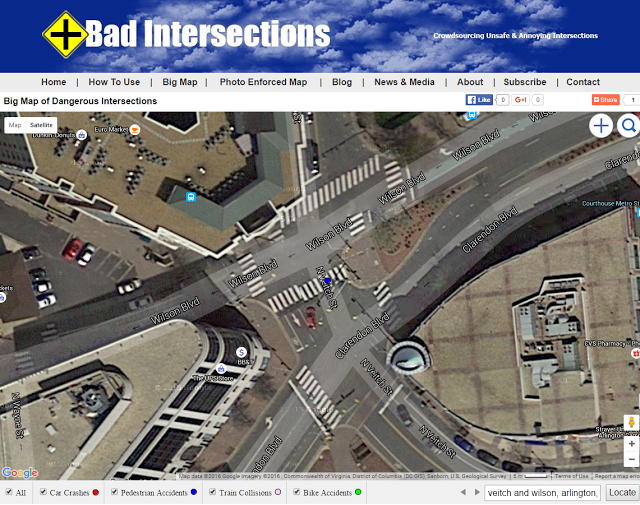
Websites such as BadIntersections.com and municipal open-data portals publish crash statistics, giving residents insight into where accidents frequently occur. Some navigation systems are beginning to integrate this data, warning drivers as they approach historically hazardous spots.

Case Studies: Famous Dangerous Intersections

  • Times Square, New York City – Once notorious for pedestrian accidents, redesign efforts with pedestrian plazas drastically reduced collisions.

  • Hollywood & Highland, Los Angeles – Heavy tourist foot traffic and complex signals made this intersection risky until crossing improvements were introduced.

  • Lake Shore Drive & Belmont, Chicago – Known for sudden merges and high speeds, local drivers often approach with extreme caution.

These examples highlight that while some intersections "look" dangerous, others only reveal their risk through accident history and data.

Improving Awareness

Public Education

Cities can run awareness campaigns, highlighting high-risk intersections through local media or social channels.

Better Signage

Warning signs before difficult intersections remind drivers to slow down or prepare for unusual conditions.

Technology Integration

Navigation apps that provide “danger alerts” could dramatically reduce accidents by warning unfamiliar drivers before they reach a problem area.

Community Reporting

Crowdsourced platforms allow residents to share experiences, helping others avoid the same hazards.

What Drivers Can Do

Drivers who want to protect themselves should adopt a proactive mindset:

  1. Research before driving – Check online maps of crash-prone intersections.

  2. Stay alert at all crossings – Assume intersections are higher-risk zones.

  3. Follow defensive driving techniques – Look left, right, and left again before entering.

  4. Reduce speed – Approaching more slowly buys extra reaction time.

Awareness is the first step toward avoiding collisions, but behavior change is equally important.

The Bottom Line

So, are most people aware of dangerous intersections when they see them? The answer is: partly. While locals may recognize some obvious trouble spots, many hazards are hidden from view and only revealed through data. Out-of-town drivers and distracted commuters are especially vulnerable.

Increasing awareness through technology, public education, and community reporting can help bridge the gap. Until then, every driver should treat intersections with caution—because even the safest-looking crossroads may hold hidden dangers.

How to Anticipate a Dangerous Intersection and What to Do

Intersections are where most serious traffic conflicts happen. According to the Federal Highway Administration, over 50% of injury crashes and roughly 25% of all traffic fatalities occur at intersections. While many are routine, others are deceptively dangerous — especially if you're unfamiliar with the area.

50 Dangerous U.S. Neighborhoods Tourists Should Avoid

When you're visiting a new city, it's easy to assume that all neighborhoods are equally safe—but that's not the case. Crime tends to concentrate in specific pockets, and knowing where those areas are can help you stay out of trouble while traveling.

This guide from Blog.BadIntersections.com identifies 50 U.S. cities with neighborhoods travelers should avoid, especially after dark. We’ve included crime statistics, local insight, and practical travel tips to help you navigate unfamiliar ground safely.

Why Certain Neighborhoods Are Riskier

Crime isn’t randomly distributed. According to the Bureau of Justice Statistics, over 50% of urban violent crime occurs in just 5% of city blocks. Neighborhoods with high poverty, gang activity, or inadequate policing often see higher rates of assault, robbery, and homicide.

For travelers, even a brief detour into the wrong area can result in car break-ins, scams, or worse. That’s why we compiled this list using FBI data, local crime reports, and real traveler reviews.

The 50 Worst Neighborhoods for Tourists to Avoid in the U.S.

🔴 1–10: High-Crime Zones in America’s Biggest Cities

  1. Chicago, ILWest Garfield Park, Englewood, South Shore

    West Garfield Park has 131.8 violent crimes per 1,000 residents, the city’s highest.

  2. Los Angeles, CASkid Row, South LA, Watts

    Skid Row is home to 4,400+ unhoused individuals and widespread open-air drug use.

  3. San Francisco, CATenderloin, Civic Center

    Drug overdoses here are 10× the city average.

  4. New York City, NYBrownsville (Brooklyn), South Bronx

    Brownsville has some of NYC’s highest shooting rates.

  5. Philadelphia, PAKensington, North Philly

    Kensington is the epicenter of the fentanyl crisis.

  6. Baltimore, MDSandtown-Winchester, Cherry Hill

    Over 300 murders citywide in 2023, many concentrated here.

  7. Detroit, MIWarrendale, Brightmoor, Dexter-Linwood

    Detroit’s violent crime rate is 2.5× the national average.

  8. St. Louis, MOWells-Goodfellow, College Hill

    Ranked #1 for murders per capita in the U.S.

  9. New Orleans, LACentral City, 7th Ward

    Homicides in 2023 rose by 20% in these neighborhoods.

  10. Atlanta, GABankhead, Vine City

Gun violence in Bankhead is consistently among the city’s worst.

🟠 11–30: Cities with Surging Crime Clusters

  1. Cleveland, OHGlenville, Kinsman

  2. Washington, DCAnacostia, Trinidad

  3. Milwaukee, WIMetcalfe Park, Amani

  4. Memphis, TNFrayser, Orange Mound

  5. Oakland, CAEast Oakland, Acorn

  6. Houston, TXSunnyside, Acres Homes

  7. Dallas, TXSouth Dallas, Pleasant Grove

  8. Indianapolis, INHaughville, Near Eastside

  9. Kansas City, MOEast Side, Ivanhoe

  10. Cincinnati, OHAvondale, West End

  11. Miami, FLOvertown, Liberty City

  12. Orlando, FLParramore, Washington Shores

  13. Tampa, FLEast Tampa, Sulphur Springs

  14. Las Vegas, NVNaked City, North Las Vegas (some parts)

  15. Phoenix, AZMaryvale, South Phoenix

  16. San Antonio, TXDenver Heights, Eastwood Village

  17. Fresno, CAEdison, Central Fresno

  18. Sacramento, CAOak Park, Del Paso Heights

  19. Albuquerque, NMInternational District, Trumbull

  20. Birmingham, ALEnsley, North Birmingham

🟡 31–50: Underrated But Risky

  1. Anchorage, AKMountain View, Spenard

  2. Jackson, MSWashington Addition, West Jackson

  3. Rochester, NYLyell-Otis, Upper Falls

  4. Buffalo, NYBroadway-Fillmore, East Side

  5. Bridgeport, CTEast End, Hollow

  6. Hartford, CTClay-Arsenal, North End

  7. Springfield, MAMason Square, Liberty Heights

  8. Wilmington, DESouthbridge, West Center City

  9. Camden, NJWhitman Park, Waterfront South

  10. Paterson, NJ4th Ward, South Paterson

  11. Newark, NJSouth Ward, Central Ward

  12. Stockton, CAAirport Way, South Stockton

  13. Lansing, MINorthwest Lansing, Knollwood

  14. Toledo, OHJunction, North End

  15. Flint, MINorth Flint, Civic Park

  16. Charleston, SCNorth Charleston (some areas)

  17. Columbia, SCFarrow Hills, North Columbia

  18. Little Rock, ARSouthwest Little Rock, East End

  19. Oklahoma City, OKSpencer, NE 23rd St Corridor

  20. Tulsa, OKNorth Tulsa, Turley

How to Stay Safe in an Unfamiliar City

Traveling smart can make all the difference. Use these pro tips:

  • Check crime maps before booking lodging.

  • Avoid walking alone in poorly lit or unfamiliar areas.

  • Use rideshare apps instead of public transit late at night.

  • Blend in. Don’t wear flashy jewelry or carry expensive gear visibly.

  • Ask locals (hotel staff, Uber drivers) where not to go.

Final Thoughts

While no city is entirely safe or unsafe, knowing which neighborhoods to avoid can prevent theft, scams, and dangerous encounters. These 50 U.S. cities all have great attractions—but also pockets where caution is critical.

At Blog.BadIntersections.com, we help travelers navigate America’s most dangerous streets and intersections—so you don’t have to learn the hard way.

Top 10 Causes of Death Ages 15–29

Road Traffic Injuries Chart

regions of the World road fataliteis chart

Young adulthood is often considered a healthy stage of life, but people between 15 and 29 still face serious health and safety risks. The World Health Organization (WHO) and national health agencies show that many of these deaths are preventable, often tied to behavioral choices, environmental hazards, or gaps in healthcare access. One of the most striking insights is that many tragedies occur in everyday environments—on the road, in schools, in communities—where better planning, awareness, and intervention could save lives. Below are the top 10 causes of death in this age group, with an emphasis on prevention strategies.

1. Road Traffic Injuries

Road traffic injuries remain the leading cause of death for people ages 15–29. Young drivers, passengers, cyclists, and pedestrians are disproportionately represented in crash statistics due to inexperience, speeding, distraction, and impaired driving. A large portion of these accidents occur at road intersections, where multiple lanes of traffic meet and decision-making must be fast and precise. Poorly designed intersections without adequate signals or pedestrian crosswalks increase the risks even further. In cities worldwide, intersections account for a high share of serious crashes, making them a critical focus for traffic safety. Preventing these deaths requires stricter enforcement of seat belt and helmet laws, effective intersection design (roundabouts, protected left turns, pedestrian signals), and education campaigns that emphasize safe driving habits.

2. Suicide

Suicide is one of the top causes of death among young adults, often linked to stress, depression, anxiety, and social pressures. The late teenage years and twenties are a time of major transitions—college, employment, financial independence, and relationships—that can intensify emotional strain. Stigma surrounding mental health prevents many from seeking help. Prevention strategies include improved access to mental health care, school- and workplace-based counseling, crisis hotlines, and campaigns to normalize seeking support. Friends and peers also play a role by recognizing warning signs and encouraging intervention.

3. Homicide and Violence

Violence is another leading killer of young people, especially males. Causes range from gang conflicts and community violence to domestic disputes. Firearms are involved in a large share of homicides among this age group, particularly in regions with high crime rates. Prevention strategies must combine stronger law enforcement with community programs that address root causes such as poverty, lack of education, and unemployment. Safe public spaces, after-school programs, and mentorship opportunities also reduce risk by giving youth alternatives to violence.

4. Drug Overdoses

Drug use—particularly opioids—has emerged as one of the fastest-growing threats to young adults. Experimentation often begins in late adolescence, but misuse of prescription painkillers, fentanyl, heroin, and stimulants leads to thousands of deaths annually. In the U.S., overdose has become one of the top three causes of death in this age range. Public health strategies focus on awareness campaigns, harm reduction programs (like naloxone distribution), treatment access, and stricter monitoring of prescription drugs. Addressing underlying issues such as unemployment, trauma, and mental illness is also essential.

5. HIV/AIDS and Infectious Diseases

Despite medical advances, HIV/AIDS continues to be a major cause of death among people aged 15–29, particularly in sub-Saharan Africa. Many young people lack access to testing, treatment, and prevention tools. Tuberculosis and other infectious diseases also claim lives in areas with weak healthcare infrastructure. Education about safe sexual practices, expansion of antiretroviral therapy, and vaccination campaigns can significantly reduce deaths. Global programs that target young populations specifically have already demonstrated progress, but continued investment is needed.

6. Drowning

Drowning is a preventable but persistent cause of death among young adults. Risk factors include poor swimming ability, alcohol consumption near water, and unsafe recreational practices. In many regions, natural bodies of water lack signage, lifeguards, or barriers to prevent accidents. Education in water safety, teaching swimming from an early age, and enforcing rules on alcohol use around water are effective preventive measures. Urban planning also plays a role—better lighting and fencing around canals, lakes, and reservoirs can reduce risks.

7. Non-Communicable Diseases

While often associated with older adults, non-communicable diseases (NCDs) like heart disease, diabetes, and certain cancers are increasingly affecting young people. Risk factors include sedentary lifestyles, poor diet, smoking, and excessive alcohol consumption. In some countries, obesity rates among young adults are rising rapidly, leading to earlier onset of chronic conditions. Prevention depends on education about nutrition and exercise, access to affordable healthcare, and public health policies like restrictions on tobacco and sugary drinks.

8. Maternal Conditions

For women ages 15–29, pregnancy-related complications remain a leading cause of death worldwide. Many fatalities result from inadequate prenatal care, unsafe abortions, or lack of skilled attendants during childbirth. In low-income countries, maternal mortality is especially high due to weak healthcare systems. Expanding access to reproductive healthcare, ensuring safe deliveries, and promoting family planning services can save thousands of young women each year.

9. Cancer

Certain cancers disproportionately affect young adults, including leukemia, lymphoma, testicular cancer, and cervical cancer. Lack of early detection and delays in diagnosis often worsen outcomes. Prevention includes HPV vaccination programs, cancer screening for high-risk groups, and education about recognizing symptoms. Expanding affordable access to treatment is also critical, as many young adults struggle with the costs of care.

10. Respiratory Infections

Lower respiratory infections, such as pneumonia, remain deadly for young adults in some regions, particularly where malnutrition and poor living conditions are prevalent. Limited access to antibiotics and healthcare facilities increases mortality rates. Vaccination, improved sanitation, and stronger health systems can greatly reduce these deaths. Although more common among children and older adults, respiratory infections still rank in the top causes for young people in vulnerable populations.

Regional Variations

The leading causes of death vary across regions. In high-income countries, suicide, overdoses, and road traffic injuries dominate. In lower-income nations, infectious diseases, maternal conditions, and road accidents (especially at poorly managed intersections) are more prevalent. Recognizing these differences allows policymakers to prioritize resources and interventions effectively.

Policy Implications

Governments play a central role in reducing mortality among young adults. Stronger traffic laws, intersection redesigns, public health campaigns, and improved access to mental health services all contribute to lowering death rates. Collaboration between public health agencies, law enforcement, and education systems creates stronger prevention frameworks. International partnerships also matter, as many causes—like infectious diseases and drug trafficking—cross borders.

What Young Adults Can Do

Personal responsibility is just as important as public policy. Young adults can:

  • Drive carefully and avoid distractions, especially at intersections where crashes are most likely.

  • Reach out for help if experiencing mental health struggles.

  • Avoid risky behaviors like unprotected sex, binge drinking, or drug experimentation.

  • Prioritize exercise, healthy eating, and preventive checkups.

  • Learn life-saving skills such as CPR, first aid, and water safety.
    Making safer choices empowers individuals to reduce risks while broader systems continue to improve.

Conclusion

The top 10 causes of death among people ages 15–29 show that youth does not guarantee immunity from health risks. Road traffic injuries—especially those occurring at intersections—lead the list, followed by suicide, violence, overdoses, and infectious diseases. Most of these deaths are preventable with stronger policies, better healthcare access, and informed personal choices. By combining infrastructure improvements, mental health support, substance abuse prevention, and education, societies can protect young lives. For individuals, awareness and proactive action provide the best defense. A healthier, safer future for young adults is possible when both communities and governments treat these risks with urgency.

How Does Regenerative Charging Work in Cars, and Is It Safer or More Dangerous for Surrounding Drivers When Going Down Hills?

As electric and hybrid vehicles become more prevalent, one feature that stands out is regenerative braking, a technology that recaptures energy typically lost during braking to recharge the vehicle's battery. This system is not only efficient but also a game-changer for energy conservation. However, some drivers wonder about its impact on safety, especially when going downhill. In this article, we'll break down how regenerative charging works and explore whether it makes the roads safer or poses new risks for surrounding drivers.

What are Examples of Road Diets to Improve Safety?

Road diets are a strategic approach to redesigning streets to enhance safety, improve mobility, and support a healthier community. By reallocating road space, road diets aim to reduce traffic speeds, minimize collisions, and create a more balanced environment for all users, including motorists, cyclists, and pedestrians. Here are some effective examples of road diets that have successfully improved safety:

Dangerous Locations to Watch Fireworks from on the Streets

Fireworks are a spectacular way to celebrate holidays and special occasions, but watching them from unsafe locations can quickly turn a joyful event into a dangerous one. Understanding where not to watch fireworks is crucial for your safety and the safety of others. Here are some of the most hazardous places to avoid when enjoying fireworks displays on the streets.

How to Disable a Self-Driving Cars with Traffic Cones

Innovative or Malicious? SF Group Targets Self-Driving Cars with Traffic Cones

Waymo Autonomous Vehicle Involved in Incident with Cyclist in San Francisco

Waymo, a leader in autonomous vehicle technology, has made significant strides in developing and deploying its driverless taxi service. As the company expands its fleet and operations, understanding the safety performance and accident rates of Waymo’s autonomous taxis becomes increasingly important. This evaluation is crucial for assessing the readiness and reliability of autonomous vehicles in everyday urban settings. 

10 Reasons You're Sitting in Traffic

Are you tired of spending what feels like half your life stuck in traffic? It's frustrating, time-consuming, and can leave you feeling drained before you even reach your destination. While traffic jams are often seen as an unavoidable part of urban life, understanding the reasons behind them can help you navigate your way around or even avoid them altogether. Here are 10 common reasons why you might find yourself sitting in traffic:

Addressing the Rising Issue of Kids Running Red Lights on E-Bikes

The advent of e-bikes has revolutionized personal transportation, offering a convenient and eco-friendly alternative to traditional bicycles and cars. However, as their popularity grows, so do concerns about safety, especially when it comes to young riders. One alarming trend is the increasing number of kids running red lights on e-bikes, a behavior that poses significant risks not only to themselves but also to pedestrians and other road users. This article delves into the factors contributing to this issue and explores potential solutions to enhance safety.

Shift to Lower Speed Limits in Cities: Unveiling the Research and Optimal Speed

In recent years, a notable trend has emerged across cities worldwide: the implementation of lower speed limits. This shift, often met with mixed reactions from drivers, raises important questions about safety, efficiency, and urban design. Why are speed limits decreasing? What does research reveal about their impact? And ultimately, what constitutes the "right" speed limit for city environments?

The Rise of Roundabouts in City Intersections

In an era where urban congestion and traffic fatalities plague cities worldwide, innovative solutions are being sought to enhance traffic flow and safety. One such solution gaining momentum is the conversion of traditional intersections into roundabouts. From bustling metropolises to quaint towns, cities across the globe are embracing the roundabout revolution. Let's delve into why this trend is gaining traction and which cities are leading the charge.

Why Manual Bikes Are Safer Than Electric Bikes on the Road

In recent years, electric bikes (e-bikes) have surged in popularity due to their convenience and ease of use, particularly for commuting and long-distance travel. However, when it comes to safety on the road, manual bikes still hold a significant edge over their electric counterparts. This article explores the various reasons why manual bikes are considered safer than electric bikes for road travel.

Understanding the Pitfalls of Phone Navigation Dependency

Why You Should Diversify Your Navigation Skills

Driving Towards Safety: Emerging Trends in Automotive Safety Technology

In an era where road safety is a top priority, automotive manufacturers are continuously innovating to enhance vehicle safety through cutting-edge technology. From advanced driver assistance systems (ADAS) to vehicle-to-everything (V2X) communication, let's explore the latest trends shaping the landscape of automotive safety.